It’s ten minutes past close when I blink and find that I’m still lost in my own palm. My left hand lays motionless before me, a corpse at a viewing. The singular spotlight that normally shines over the circular table in the middle of the room is off, and all that remains to illuminate my reading is the pulsating hum of green neon from the sign in the window. The words flash one at a time, all together, and then disappear. “Palm Readings… Mystic Dabrowski.” The words surround an out turned hand. I take my mother’s reading needle, and trace it over the mounts and lines. “Divination is half reading, half guiding the seeker, but all pageantry” my mother used to say. The needle hisses as it scrapes across the soft flesh of my hand. Health, Love, Heart, Head. All lines interweave like the threads of a dreamcatcher. And here, in the gloom, I can’t interpret any of it.
The last woman to come in was too young to be as dead as she was. Upon her face was the same desperate mask they all wear when walking through my door: the anxious, wide-eyed gaze of the onlookers of Christ’s Crucifixion. I knew her before she even reached the chair adjacent to mine. Sluggish gait. Hollow eyes. Trembling hand. Skin thin and brittle. Mummified. The dead and I are well acquainted… here in a room between worlds.
“Tell me my future,” she wheezed, collapsing into the chair, laying her hand across the red velvet cloth between us. I didn’t tell her that it’s not the purpose of palmists to determine any sort of future. My clients are always the souls in Limbo: the drifting ones, the desperate ones. I wrapped her hand in mine. The flesh was cold and clammy. The joints of her fingers were knobby like willow branches. I exhaled and traced her palm. And began the part I’d grown to hate.
The half-lie.
“Your Life line is deep” I told her, “you have strength within you.” I ignored the additional fact that the line was short and straight. Her eyes shimmered in the gloom. I looked down so I didn’t have to meet them. As my mother’s needle crossed the center of her palm, she grimaced. I found her Heart line, which was long and swooping. “Your love is true.” I continued, and her body hitched. The line faded at the end below her index finger. I felt like throwing up. Proceeding with the reading, I told her what she wanted to hear, but not what she needed. I drew musty air from the dried up well and told her it would quench her thirst. Five minutes later, her time was up. She thanked me. And when she left, a part of me departed with her and died.
Then I blink, and find myself staring at my own hand.
The scent of musty cigarettes and incense permeates the room, the ghost of my mother lingering ever present. Sometimes when I’m reading someone’s palm, I can still hear her syrupy voice, can still feel the weight of her nicotine stained finger as she traces it across the valleys of my palm, tapping the mounts.
“Take the needle in your hand, feel the way it runs across the skin without cutting it. Press the flat of it here, the Mount of Luna. Yes! See how it is raised higher than the others on your hand? The blood beneath here flows strong. This is your connection to the beyond, your ability to divine. You will be a great reader, moj drogi. It is written upon your hand.”
It is spoken in a tone that knows as much as it suggests. A tone that tells women whose husbands have been unfaithful that Karma is a spiteful snake, waiting in the deep grass to strike. A tone that takes a young boy by the hand and guides him, through the haze of tobacco smoke, towards a table that can imbue him with the same thrum of power he feels when gazing at his mother.
But when I stare at my own palm, I don’t see the raised mount, even though I know where it lies. My skin is parchment white and blank, thin and windblown. It has always been this way.
The ivory light of the moon spills through the bars in front of the neon sign.
Lost in memory, I press too hard, the needle punctures the skin, and a single bead of ink rises from my flesh. It blooms and breaks, cutting across my palm, trickling up to my middle finger.
The Fate line.
I draw her reading needle through the blood and study it.
As a boy, the Fate line seemed most important, the grand finale of every reading. Watching my mother perform, it was apparent that even when seekers came to learn of their fortune or health, what they longed for was the truth within that line. She would always pause before that reading, the tip of her cigarette illuminating her eyes while all else was shrouded in smoke.
“This is where I deliver the truth,” she would tell me later, “the one we all want to hear. Our Destiny.”
It was bullshit, a reading based mostly on the look on their face, the condition of their hands, and the questions they asked. It was the lie that was the worst… the one that I gave a piece of myself to every client for as a penance. Your line is deep and true? You will find success with your career and desires throughout life. Your line is deep but fades? You must concentrate on your success while you’re young, for your luck will soon run out. Your line is thin and shallow? You will not achieve your goals. Put your energy elsewhere.
Or… you are not bound to your current destiny.
There is another pinch, and a second tear rolls across my palm, cutting from between my index and middle finger to the outer digit of my left hand. The Heart line. Before I can stop myself, the needle pierces the Venus Mount, the fleshy mound beneath my thumb that my mother taught me to use when testing steak tenderness when the palm wasn’t being used for divine purpose. Point after point the needle penetrates flesh, harvesting blood and carving lines that sweep across the pale canvas of my hand.
And I can see it, but I cannot read it.
The moon draws me from the table, and I stumble out into her light. It is cool and soothes the stinging in my left hand. I thrust my hand out in front of me and open my palm. My mother’s needle rolls from my fingers, spinning in the air like a broken compass before shattering on the ground among the half smoked cigarette butts of the strip mall parking lot. Blood webs across my hand in sticky red threads, dripping from the sides of my palm. The Head bleeds into the Heart. Fate into Health. I trace my lines with my finger and read them for the first time. I read my destiny. And although I am terrified by my reading it, like the moon above, the act fills me with something I haven’t felt since my mother proclaimed me to be the last great palmist.
Nastya Ivanov stared at her reflection in the mirror. The black tile in the background contrasted the golden aura emanating from the globe lights above the sink, casting her pale face in a corona of warmth. Gray eyes peered at her through heavily mascaraed lashes, scrutinizing her appearance as she practiced some of her mannerisms. She applied another layer of lipstick and stepped back. Her silver dress shimmered in the dimly lit room, reflecting dots of light like the scales of a fish. It was something that Sarah Artinian wouldn’t have worn, but it suited her just fine.
The momentary thought of that name caused the corner of her mouth to twitch. She clenched her jaw and closed her eyes.
Я – это я she repeated to herself, finding the sounds in the back of her throat instead of her nose. She forced the image of the woman that she was to the surface, drowning any hint of the woman that came before her. She straightened her spine until she was practically leaning back. Eventually the voice that came from her mouth flattened into its Russian accent and cadence. When she was certain she would open her eyes and see herself, she did.
Standing before her was a dead woman.
The past five months had changed Nastya Ivanov. It had faded her brown hair to a straw blonde, and her eyes had lost their vibrant green in favor of a pale gray. Her breasts had gone down by a size, while her ass had gained as much. Her feet hadn’t needed to change sizes, which was good. To do so would have required too much time for recovery. There was no room for error, not with this disguise. Nastya was an influential celebrity and would be recognized by almost anyone in the nation. Now, all that remained was the memory of a tiny brown dog, a photograph of a brick Victorian house in Boston, a microchip embedded in between the joints of her right big toe, the mission, a key to a car in a parking garage five blocks away, and a plane ticket in the glove box.
Tonight was Nastya’s last night on Earth.
***
When she reentered the dining room, the conversation had lifted considerably. The food had been removed. A shot of vodka sat perched on a red napkin. Approaching, she watched as the eyes of the gentlemen seated around the table turned towards her, aware of the yoyo action that so many men think women oblivious to. Sergei Sokolov, Russian diplomat, ex-KGB, her lover, ogled her hungrily and offered her his stubbled cheek, which she kissed. She rounded the head of the table, to the chair on his left. A pair of gloved hands swept around her and pulled the chair away from the white slab of marble Sergei lovingly referred to as his torture table.
“Here, I can obtain whatever I desire. Power. Information. Women,” he’d told her once, drunk on Sbiten, hands fumbling for the buttons of her silk blouse. Nastya took him upstairs, and there used another piece of furniture for a similar deed. Men were susceptible to sharing secrets when their pants were removed. It was in these moments post-coiatus that she’d learned the names of double agents within the U.S. intelligence network, dates of potential mortar strikes, even petty blackmail. But tonight was to be her biggest score.
That was the date, time, and method of the assassination of a western diplomat.
Nastya took a seat. Sergei stood, raising his shot glass. The others at the table did the same. Nastya took it in her left hand, despite the predisposition of the woman she’d been before.
“To terrible deeds,” he spoke in Russian, “and the good they bring to this world.”
“за нас!” To us! came the response.
Nastya had met herself only once in a past life, at a red carpet event that her former agency had sent her to. The women had talked briefly. In that time Nastya observed some of the miniscule ticks the model had had that weren’t prevalent in her Tik-Tok videos and interviews: the way she pursed her lips after words ending in a “r” sound, her habit of biting her thumb when she was nervous.
“We are through talking business, yes?” grumbled Dima Petrov, waving his sausage-like fingers. This was the transition Nastya had heard Sergei discussing on their way back from dinner two nights previously, the phrase that dictated that the night was shifting from banter into one of action and decision making.
“Politics are exhausting. Every solution is the beginning to another problem,” agreed Abrasha Belov, an oil baron who Natsya had met only once, but whose temper and cocaine use were notorious.
“Let us begin with a celebration then,” Sergei snapped his fingers and a man with a bottle on a silver platter appeared. He poured himself another shot of vodka, and then took Nastya’s glass and filled it.
The bottle traveled around the room, each man pouring himself a full shot. The liquid dispersed, Sergei raised a toast.
“To my beautiful daughter, Elizaveta, and her upcoming birthday!”
Glasses crested and fell in the dim light. The vodka was smooth and clean. As she swallowed, Nastya flipped through briefings in her mind. The diplomat did have a daughter from a previous marriage. She was a bit younger than Nastya, who had been 24 when she died.
“Your daughter is becoming a woman this December if I’m not mistaken,” Dima recalled, massaging his jowled chin. Natsya noted the young woman’s age as 18. And so, she thought, we have a date.
“She is. I will not be able to fight off these young men for much longer.”
“Perhaps it will not be the young men you must watch out for, is that not true Nastya?” a gentleman named Lenya who Natsya had not met until this night spoke. She didn’t like the way he studied her. Sergei stiffened in his seat.
“Well if young men took my Sergei for example and used their mouths for more than just talking, I would have more interest in them,” she replied. Sergei’s hand found her knee and gently moved the slit of her dress so he could caress her bare flesh.
“Your accent is curious,” Lenya stated. “Where did you say you were from?”
“Kologriv,” she stated without thinking.
Lenya looked at her suspiciously. “You speak like a woman I knew from Tambov. I am fascinated why you speak like a southern girl.”
Nastya was aware that the focus of the room had shifted from her lover to her. Kicking herself, she made a quick correction to implement Оканье to her vowel structure. “I have been to many places here and abroad. Forgive me if my tongue sometimes… slips.” She reached down and slid Sergei’s hand further up her leg in an attempt to draw his attention elsewhere. “Where do you plan to take her to celebrate, my love?”
“I hear bird watching is quite pleasant this time of year,” spoke Dima. “Perhaps a trip to the country. Robins in the snow have always been a striking image.”
Sergei was silent.
“I disagree. I always find myself searching the skies for a golden eagle, something more majestic to instill within myself a feeling of power,” suggested Abrasha.
Again, Sergei said nothing. Nastya made a note of these two birds, and their national origin.
“My Elizaveta is a strong girl, not prone to stillness or idle time. She desires to make with her own hands. No, a turkey is what she wants to hunt and prepare for her feast.”
The room was silent. Sergei’s eyes shifted to each of the gentlemen, their faces cast into shadows by the low light.
So… the target is American. Nastya thought to herself.
“Sir, I agree that turkey is a fine beast, but is it in season?”
“It is the right season.” Sergei Sokolov’s voice shifted, losing its bright and boisterous timbre. It was a tone she’d never had directed at herself, for she was compliant to his wishes and he was a gentleman towards her. But during late night phone calls, before the disappearances of revolutionaries, yes, she had heard it.
“Which turkey, my friend?” asked Dima slowly, his hands moving only to take the bottle of vodka from the center of the table so that he could pour another shot. Again, the bottle orbited the table. When it reached Nastya she looked to the diplomat next to her. Sergei nodded and she filled both their glasses. Nastya was known for her late night Instagram posts in which she outdrank celebrities and artists, but as she tipped the glass back she worried about the fog that was building in the back of her mind.
“The biggest one she can find,” Sergei dismissed this comment with a wave of his hand. There was an uncertainty settling within the men around her, Nastya noted.
Abrasha was the first to speak. He sniffed and slapped his hands together. The men perked up, as if drawn from an impending slumber.
“Wonderful, and is this for lunch, or dinner?”
“Dinner, I think,” Sergei replied. “She wishes to prepare it, but it is the dessert I want to be a gift.”
Nastya’s mind raced. Was this part of the code or a deflection?
“Cake perhaps?” shrugged Kolya.
The man named Lenya shook his head. “A cake is not dense enough for a girl with such… refined taste. Perhaps a truffle?”
“It should be rich enough for her, yes,” Sergei agreed. He placed a hand on his stomach. “But as you know, such decadent treats make me sick.”
She studied the large man on her right. Everything he said had to mean something. Every gesture, every word was meant to be vague but pointed enough for the orders to be carried out. Glancing at the others at the table, she saw them nodding along. The words were muddled in translation, but she tried to work through them.
“But I am afraid the woman who is my chef, she is not strong with these sorts of things. Her pastries, divine, but her sweets leave much to be desired. One of you perhaps?”
Dima Petrov looked particularly discomforted. His fat fingers rolled around each other like hot dogs at a United States gas station, something Nastya couldn’t believe she longed to see. Abrasha opened his mouth but hesitated.
It was Lenya who rose from his chair. “My cousin is a chef, studying in France. He is good at his trade but his wallet does not agree with his…” he paused. His eyes turned to Nastya, “lavish lifestyle. I believe an opportunity to prove his skill might earn him a seat in this house.”
Sergei’s head bobbed up and down.“I do agree, friend. If he can be convinced to make this dessert for my daughter, and it satisfies her, he would find a space in my kitchen.”
Lenya finished the rest of his shot, and strode to the head of the table. He took Sergei’s hand and turned to the woman on his left. “It is an honor to finally meet you, Lady Ivanov. I have spent hours admiring you. To see you in person…Forgive me, you have a different appearance.” His eyes darted from one to the other. “More beautiful than I remember.”
He released the politician’s hand, bid the rest of the room “Доброй ночи,” and disappeared into the gloom. The others turned from the departing man back to the table and Nastya became acutely aware of three things.
The man named Lenya knew she was not Nastya Ivanov
She had two minutes before he would be calling a gray cellphone in the top right drawer of Sergei’s desk
Sergei Ivanov planned to have the President of the United States assassinated on December 18th by poisoning him after dinner.
The bottle floated around the table a second time and this time it was Abrasha Belov who rose from his chair. “A toast to your daughter’s birthday. We wish her a successful hunt, a marvelous dinner, and the richest life in the years to come. За успех!”
The bottle reached her. She put up a hand and passed it to her lover. When Sergei caught her eye she closed her lids slightly, swayed in her seat, and shook her hand, a trace of mimicked lust on her lips. He winked at her.
“За успех!” The words echoed around the table. The deed was sealed. Nastya rose and kissed Sergei.
“Ложитесь спать,” Come to bed she whispered the same way she had in many perfume commercials. Turning, she walked towards the hallway. She hoped the sound of her footsteps masked the thundering of her heart in her chest. The corridor was miles long, the richness of the red carpet and mahogany wood creating a coffin-like sensation as she approached the rooms at the end. There, she turned left into the politician’s office instead of right, to the bedroom.
The door had not even closed when a soft hum vibrated through the gloom of the office. The desk was illuminated only by the harvest moon yellow of the streetlamp outside. She crept towards it and, removing one of the bobby pins in her hair, fumbled with the lock of the drawer. It was open within seconds. She picked up the phone. Somewhere down the hall, Russian laughter rolled thick and lush, and she nearly dropped the device. There was one missed call, a name she’d never heard or seen.
Taking the phone to buy more time, she pried the window open. The air was sharp and biting. It cut through the material of her dress. She pulled off the silver gown and flipped it inside out. It became something new. Within the material were buttons to give the impression of an overcoat, and fabric that had been tucked down the back elongated into sleeves. She pulled it back over her head and slunk out the window, pulling it closed. Her movements were quick, but controlled. The pins fell from her hair and loose curls tumbled down her shoulders. A napkin removed the bright red shade from her lips. Tonight, Sergei would begin the search for her. A month later a body would be dumped from an unmarked van into the Yenesei river. A badly decomposed, water logged Nastya Ivanov would appear. There would be no signs of foul play, just the lingering traces of heavy narcotics use that had, unfortunately, led to her actual demise. Sometime, a month later, an assassination attempt on the President would be thwarted. No one but Sergei and his men would know.
And somewhere in Boston, a woman named Sarah Artinian would be drinking chai tea with a book in her hand and a small dog on her lap.
That is, if Nastya could make it to the airport before word of her disappearance caught her.
When the boy stepped into the cockpit, all was silent. The flashing blues and yellows of the dashboard had ceased. All that remained, present through the window that encompassed them in a half-sphere, was the infinite abyss and the few remaining stars that flickered within it like distant lanterns. He took a step, and from the gloom a flat, staggering voice spoke.
<I apologize. I believe that I have failed you.>
The boy approached the twin chairs at the front of the room.
The robot sat rigid in the leftmost chair. Rivulets of oil leaked from its visual and auditory receptors and loose panels clung to wires like the last of Autumn’s leaves on her branches. At the sound of the boy moving, the robot turned its head to perceive him.
“But you said we only have a month left. We’re so close,” the boy whispered.
<Correct. Software has begun to fail, Casius. My system is deleting memory files to prioritize essential functions. Once those are erased, the operations bank will shortly follow.>
The boy lowered his head, strands of long, brown hair shrouding his face, and sniffled.
“It’s my fault, isn’t it.”
<To put you at fault would be to insinuate that you were in control of this situation. The prolonged exposure to the radiation levels your heart emits has caused the failure of my system.>
Silence invaded the spaces where the robot had once played ancient 00’s dance hits from its internal speaker.
“Can’t you rebuild yourself?”
<I have done so many times Casius, but we are no longer in possession of the necessary parts. And this time, I am afraid, it is not my hardware.>
“But if we change course, surely we can get to Zalaria-1 or Uxx-”
<Your mother’s final directive was very clear, child, as were the lessons she wished for you to learn. Lesson one->
“Do not blindly trust,” the boy spoke reverently.
<Precisely. To put our fates in someone else’s hands now, when we are so close to our objective, could place you in a vulnerable situation. To do so would be a waste of your mother’s death.> The robot lifted its right hand. Its internal mechanisms groaned, and it trembled as it fought against the violent radiation damage done to its form. A rusted finger found the boy’s cheek, where it collected a single teardrop. <Don’t cry child. You will need the moisture.>
“Tell me about her again.”
<The many traits you seek to know about your mother are within you Casius. Your intelligence, your compassion, your knack for tinkering. All of these are traits she possessed.>
“And my father?”
<As I do not possess a picture, you will simply have to look in a mirror. There, you will find his face.> The robot paused, processing its responses where they had once been instantaneous. <and his bravery.>
“What did he do that was brave?”
<You are aware of this story, but I will recount it for your comfort. As he and your mother were being hunted for your species’ Gaianium hearts, your father was one of the last to stay on Toros while your mother and I escaped. All transmissions from Toros, post-vacancy, were coded with imperial encryption. Completion of your father’s mission had minimal success probability, and yet he stayed to delay Imperial troops.>
The boy turned from the robot and stared out the front of the craft. The android noted the boy’s posture straightening, but did not acknowledge it.
“And you think I’m that brave?”
<Yes. And you will need to be.>
“What if I’m not able to? What if I’m afraid?”
<Fear is unavoidable and, like any emotion, it should be allowed to exist. Do not be unafraid. Be afraid, but be still in your resolve. Lesson Two.>
“Be prepared, and your fear will be manageable.”
<Correct. That is bravery.>
“Are you brave?” the boy asked.
<I am not able to be brave.>
“But you’re not afraid.”
<I am unable to feel fear, Casius.>
“But you’re dying.”
<My system is failing, as are my physical and computing functions.>
“And you said so yourself: it is built into your programming to survive.”
<That is… correct.>
“So you went against your programming to protect me.”
<That is… correct. As your mother died, I held you to my internal core and processed in patterns that would elevate the output temperature of my CPU to match that of her pulse.>
“But… you also knew about my Gaianium heart.”
<I am aware of your species’ condition. Yes.>
Silence fell upon the cabin. All that cued the boy into the android’s continued existence was the sluggish blinking of its singular, crimson retinae. The robot shifted in its seat, its internal mechanisms grinding and thumping.
“What if they’re not out there?” Casius asked. There was a whirring sound.
<There is a 65% percent probability that this is the case. However, the high levels of radiation emitted from the core of Yosan and its proximity to the nearby sun make it a suitable candidate for not only the rumors, but the survival of your species.>
“But what if we arrive… and I’m all alone?” the boy asked. The robot reached out and placed his heavy hand on the boy’s shoulder. Bits of rust crumbled from it as he did, and the boy placed his cheek upon the cold metal.
<Inform me of your survival plan… Casius. Files containing it are in queue to be deleted.>
The boy took a deep breath and rose from his chair. There was an orange stain on his cheek from the robot’s hand.
“Step One: Early rituals. 50 push-ups. 50 sit-ups. 50 lunges. Eat nutrition bar. Clean body. Maintenance check on body.”
<…Correct…>
“Step Two: Maintenance check on ship. Ensure no unnecessary power is being wasted.”
<…Correct…>
“Step Three: Assess course. Adjust auto-pilot if needed.”
<…Corr…ect…> The robot’s form groaned as it slumped over in its chair.
“Step Four,” the boy’s voice hitched. “Record findings, discoveries, and thoughts in log.”
<…Corr…ect…>
“Step Five: Late rituals. 25 push-ups. 25 sit-ups. 25 lunges. Eat nutrition bar. Clean Body. Maintenance check…”
The boy stopped reciting his programming. The soft red light of the robot’s retinae had gone out.
<Continue…Casius… I am still cognizant.>
“When will you forget my name?”
<It will be the last thing I delete. Your final directive… please.>
“Step Six: Story time. Stargazing. Rest.”
<Ha. Ha. Ha.> The boy jolted, having never heard that sound before. < I am… laughing… to show that I approve… of your memory. You will not fail yourself.>
The boy reached out and placed his hand on the robot’s, aware that the nerve receptors built into its hands would no longer be able to feel his.
“Would you have lived forever…to see the stars go out?” Casius asked, his eyes on the slumped shadow. A minute passed. Terror and loneliness welled up inside the boy until the voice spoke.
<Would my fuel… cells and hardware… components have allowed it… yes…… But… there is… more beauty… in the life of something… than there is in the death of it……..>
“The third lesson,” the boy spoke in a hushed tone.
<…Casius…>
And then there was the Silence, the oppressive emptiness that fills the room after the final exhale. The boy removed his hand from the unmoving fingers of the communications robot, and climbed up in its lap just as he had done when he was smaller. Together, one seeing, the other not perceiving, they stared out into the great nothingness. He allowed himself to mourn. He told stories of boys exploring planets containing dangers and plants he’d only read about. He shared customs and traditions passed down from his mother to this robot, to himself. He identified distant constellations and told stories of a robot who, abandoning post and directive, took a dying mother’s child and sustained its life. And when the time came, he rose from the husk of his guardian, collected his tools, and undid the android’s lower extremities for he was not yet strong enough to carry its whole form. After his work was finished, he took the upper half in his arms and, like it had done for him so many times, carried it to the bed adjacent to his. He pulled the sheet over its head, recited the three lessons, and closed the door.
When he returned to the cockpit it was darker still, the quiet more daunting, the great expanse of space infinitely intimidating. The boy strode back to the robot’s chair and took a seat in it, inhaling the musk of motor oil and fried circuits. He stared out into the abyss, and even though he was frightened and alone, he remembered the final rule, the one given to him not by his mother or father, but the robot who had cared for him the first decade of his life. He spoke it aloud as his ship floated through the darkness, towards a life and hope uncertain.
The shadows were short when Saratoga Jane heard a commotion rise up from the main street of Amber Creek. It was interposed by shouts sharp enough to punctuate the thick stench of hot piss that permeated Jane’s tannery on the outskirts of town. A commotion wasn’t uncommon around this time of day, but she’d worked all morning and nothing made her happier than to witness someone receive an ass whoopin’. Wiping the fat and residual animal hair from her hands, she left the shade of her workshop and turned towards Amber Creek.
A crowd stood outside the Red Lady Saloon. Rising entangled from the din was a man and woman’s voice This wasn’t uncommon either, as men were oft on edge when their peckers were stiff, as were women when men’s stiff peckers were unwantedly close to them. Still, she placed her fingertips on the Sharps rifle she kept tucked next to the threshold, spat a wad of dip into the dust, and waited to see what would arise.
No sooner had the noise dwindled when there was the crack of batwing doors bursting open. Folks scattered like grouse from a meadow. The cloud from their exodus swirled like a dust devil, and as it thinned the figure of a man in a pale leather jacket and black hat remained standing in the middle of the road. To his right, another figure knelt in the dirt. In his left arm was a parcel.
Jane stepped into her tannery and donned a vest she’d made for herself last winter after the shootout with the Poudre Valley Bandits. She’d stitched four thick layers of buffalo hide to the front and back, a design that had not proved itself to be bulletproof but had seemed to allow less penetration when she’d strapped it to a cottonwood and unloaded her Peacemaker into it. She pressed a bullet into the rifle’s breech and made her way towards town.
The silence was the kind before the drop of a man at the gallows, a collective holding of breath drawn in even by the structures lining the streets. Jane had made herself familiar with this silence over the years as Amber Creek’s unofficial sheriff, as it was the same one that gathered in between the counts of paces in a duel. She marked her breathing, minded her surroundings, and relaxed her muscles. To be stiff was to preemptively lay in one’s grave.
Thirty paces from the man, she stopped, and called out
“Contrary to what your Papa might have taught you, Tom Mackey, most women don’t like being dragged about.”
The man turned, and Jane could see, even from a distance, that he was in his cups. Capillaries spread from under the shadow of his hat brim like roots from a clod of dirt. He swayed, drawing the woman kneeling next to him closer.
It was Danni Winters.
“I’d call you a law man, but we both know ye ain’t got a gun in yer sheath,” the drunk cawed.
“And I’d ask you to act like a gentleman, but I’m confident I can come to the same conclusion. Let her go.”
Tom Mackey hocked a loogie into the prostitute’s hair. The bundle in his arms squirmed. Jane’s eyes flickered between it, the girl, and the drunk.
“That her kid Mackey?”
“Ain’t got no right to keep ‘im from me. ‘E’s mine too.”
“There ain’t no way for you to know that. God knows she’s had other-”
Jane was known as a quick draw, but the sight of the child made her hesitate. In one fluid movement, Tom Mackey released Danni, and drew his pistol. The first shot found Jane in her shoulder. She dropped. Hitting the dirt, she found a thundering ache in her left arm when she tried to prop herself up. In the same movement, Tom swung the pistol level to Danni. He pulled the trigger twice. Crimson erupted from the prostitute’s bodice.
The tang of gunpowder and the wail of a child was overpowering. Using the rifle as a crutch, Jane struggled to her feet. By the time she’d regained her composure, the coward had taken off, his left arm clutching the child, the pistol in his right scanning the empty boardwalk. Jane brought a hand to where the bullet took her, and found not blood on her fingertips but flakes of sand-colored leather. By the time she’d raised her rifle, Tom had mounted Jim Barnam’s horse, and was gone.
Staggering forward, Jane felt the town around her come to life. When she reached Danni, the prostitute’s powder blue petticoat had been stained to a deep maroon. Jane knelt and took Danni in her arms, stroking strands of hair off her sweat soaked face.
“At least it’s finally cold here,” Danni Winters gurgled. A hand reached and found Jane’s. It was soft and clammy. “Bring ‘im…”
The girl’s voice was seized by a hitch, and when her final breath floated from her throat it brought with it a trail of blood. Jane had been Death’s accomplice from the moment she’d split her mother open. A life soaked in blood and brined by mountain air had left her thick skinned and tough to chew. It was enough to tan anyone’s hide.
But the child…
A muffled thump of boots in the sand approached. Jane looked up into the shadow of a boy. Manicured fingernails swept over an upper lip with four thin hairs. A shiny government star glared on his chest. Sheriff Giles cleared his throat.
“Shame to see what a girl’s lifestyle will bring upon her.”
Jane lay the girl’s head down, rose, and started off west.
“Carry her body to the cold shed and tell Doc to prepare it for viewing. I’ll be back before sundown.”
Spurs clacked as the boy scampered after her.
“As appointed sheriff-”
“Week’s been hot. A body’ll smell soon. Tell ‘im we’ll bury her at dusk.”
“I’m not a messenger boy, I’m the Law!”
“Town had Law before Uncle Sam slapped a star on a baby and sent him to play cowboy.”
“Now just-”
Jane spun and took a fistfull of his collar. The boy cowered, repressing a gag as he inhaled her stench. The life of a tanner was a lonely one. Jane preferred it.
“Go home and grease your gun, kid. Your help is unwanted.”
She sauntered off to the stable where her horse was kept. Already saddled, she swung herself upon Folstam and, with a slap on his backside, sent them galloping towards the looming wilderness.
***
Two hours later, Jane knew she’d regained some ground in her pursuit. What few horse tracks she found in the mud had grown shorter and more abundant. Tom Mackey had slowed, at least along the creek. The tracks made their way into the water. Either he was trying to throw her off and was on the other side, or he was traversing up the creek. The ride through the mountains had been hard. Folstam was foaming at the mouth. She dismounted and led him to one of the smaller offshoots of the main water. As he drank, she crept to the other bank and, finding no tracks, decided that Mackey had continued his trek up through the stream. They trudged on, keeping to the bank where the shadows were the most prevalent and where the sound of their footfalls would be masked by the gurgling stream.
Amber Creek was five meters wide and, at this time of the year, had reduced to a gentle crawl. Cottonwoods sparsely lined the sides of it, their gnarled bark burned white. Low water rolled over rocks, turning them into balls of glass. Jane continued until she heard a sound in front of her: a low, haunting wail. Wrapping Folstam’s lead to a tree, she crept forward alone.
Tom Mackey waded in the shimmering creek. Head low, horse lead in hand, he struggled knee-deep upstream. He still held the baby across his chest. Jane placed a pellet in the primer.
The child complicated things. If she took Mackey in the back, there was no guarantee that the bullet wouldn’t pass through and hit the child. If she shot him in the head or leg, there wasn’t a guarantee that he wouldn’t fall on the baby or drop it in the river. Either she would have to reposition in front of him so she could see the child, or she would have to draw him to her by calling out.
A third option presented itself. A loud crash tore the air. Jane turned, and found that Sheriff Giles had led his horse at a gallop into the waters twenty paces in front of her. Pistol drawn in an act of excess machismo, and the young man fired a shot into the sky.
“Scoundrel! Surrender yourself to the Law!”
Tom Mackey was drunk, not stupid. Releasing the reins, he twisted and unsheathed his pistol. There was a wet, thud, like a hammer hitting soft clay. Giles’ horse’s head jerked and, taken by Death, sent them both tumbling into the water. A shot cracked from the sheriff’s revolver, and snapped off into the foliage. Giles leapt from the falling beast and crashed into the mountain stream.
Tom Mackey faced his adversary. Babe clutched to chest, he fired again. The water in front of the flailing sheriff spouted. Slipping to find footing, Giles sent another two shots the drunkard’s way, oblivious to the kid. Jane noted he had one shot left before he needed to reload. Mackey had three, assuming he reloaded after shooting Danni. The boy scrambled across the stream to use the animal’s corpse as a barricade. Jane lay her rifle in the crook of a tree and reassessed.
While the boy shouted ordinances, Jane worked through her shot. If she took Mackey in the head, there was a chance his neck would snap backward, but he would fall forward. If he did, he would either crush the child on the river rocks or drown it underneath him. The right shot was the neck or upper chest. If the bullet found him there, it would carry his body backwards, the child landing upon him, hopefully giving her time to retrieve it.
Another gunshot. The boy had rechambered and was shooting wildly at Mackey. Jane nearly screamed at him to cease, but couldn’t’ afford to draw any attention. A bullet took Mackey in the leg and he collapsed to a knee. The boy rose and fired once more. A fountain erupted to Mackey’s left. The child squirmed. Mackey leveled his iron.
The bullet took the expendable Sheriff Giles in the head. He staggered a pace to his right before dropping. Letting out a yell, Mackey straightened his right leg, and started to rise. The babe thrashed in his arms, and he lowered his pistol to regain his grip on it. The child’s head bobbed up to the level of Mackey’s throat.
Jane exhaled and fired.
A mist of blood exploded from Tom Mackey and he, like the husk of a burnt cabin, collapsed backwards.
The child stopped screaming.
Jane was up before Mackey’s body hit the water, and was thrashing towards him through the river as, on his back, he floated towards her. When the body was a stride away she plunged upon it and took the babe into her arms. It was covered in thick, warm blood and was still. A lump in her throat, she turned the baby to look at it.
Danni’s child stared up at her with open eyes, reaching toward her leathered face with its soft, delicate hand. Collapsing to the rocks of the river, aware of the dull pain that shot up her knees when she did, Jane held the child and wept while her rifle smoked on the bank and two corpses floated past her, down river, towards the town that was its namesake.
Genre: Action/Adventure Event: Superfluous Character: A Tanner
It wasn’t until the wheels of my Cessna 185 touched ground, plumes of snow erupting from either side of the craft like salmon leaping upstream, that I exhaled. Dusk had fallen, and the gale that battered my craft for the past hour had seemingly come out of nowhere. Hands trembling, I released the yolk and dug into the pockets of my worn sheepskin coat, fishing for the flask of whiskey I kept there. The darkness and the solitude had a way of playing with a man’s mind, I rationalized. The hum of the aircraft and the quiet was different at fifteen thousand feet. It did things to a person. As I strapped on my jacket, and prepared to tie down the plane for the night, I replayed the image again in my mind.
The sudden, unexpected blizzard.
Me, looking at my map for a forgotten runway on which to wait out the storm.
The flash of lightning.
The shadow that seemed to rise and then sink below the churning sea of grey clouds.
This wasn’t the first time I’d seen or heard something strange I couldn’t quite comprehend. Voices in the Northern Lights. Aircrafts that seem to be flying next to you one minute before disappearing straight up into the sky the next. The reflections of deceased loved ones in the windshield glass… and yet there had been something different about this. Something seemingly more… concrete. It felt real enough that, when I identified the old Juniper runway tucked beneath the Wrangell Mountains, I decided to descend. The wind batted the aircraft back and forth but I finally managed to touch her down. Forty years and this old girl had about seen it all. Still, it was more than the weather that had set my nerves on edge.
I’d just finished hammering down the final tie when the hairs rose on the back of my neck. Lord knows I’d spent plenty of nights alone in the bush, listening to the huff of a bear as he plodded past my tent. This was it, that thrumming sensation one got when a pair of eyes were on their back. Turning, I thumbed the hammer of the .44 Frontiersman revolver strapped to my side.
The man stood ten feet back from me. He was bare from the waist up, and was lashed with scars that were somehow a shade of ivory lighter than him. His irises shone bright in the moonlight, and below his sunken eyes and crooked nose was a long, thin beard that swept around his shoulders and neck like seaweed. Over his shoulder I caught a glimpse of something that had been obscured by gusts of snow and ice. It was a small cabin, a hundred meters away at the edge of the wood. A tongue of yellow light glowed in the window. The pale man beckoned to me, a voice that shouldn’t have been audible above the wind.
“Come.” He spoke. “It is cold… grows colder still.”
He did not speak again, but instead turned and staggered away. I looked back at my plane and thought about the long frigid night I would spend huddled in the cab, and when I turned the man had all but vanished. The shadow in the sky still imprinted on my mind, I snapped open one of the side storage compartments and grabbed my survival pack before turning and struggling through the knee deep snow after him. The man’s tracks had been swept almost clean by the gale, and all I had to follow were slightly sunken imprints until the cabin was once again in view.
It was a humble affair, a one room shack with a small table, two stumps of wood presumably used as chairs, a fireplace, a shelf with one book, and a cot. He was already carrying one of the stumps over to the fireplace as I entered the hut, and after sitting upon it began removing his lace-less, ragged boots. He nodded his head over at the table as I clomped the snow from my boots on the threshold.
“Bear meat,” he wheezed, “and whiskey.”
“Thank you kindly,” I smiled, the warmth of the fireplace already blooming on my wind whipped cheeks. “But I’ll stick to my own whiskey. Goods are hard to come by out here.”
The stranger shook his head and again gestured to the table.
“Guests… so few.” He said. When he spoke his voice was dry and husky, like the strings of a guitar long forgotten in a closet. “It would… do me the… honor of being a host.”
I looked down at the table and there, sitting across from each other, were two bowls, one full of meat and broth, the other empty.
“Is there someone else living with you? I don’t mean to intrude,” I began but the man shook his head and held up a hand.
“Torngarsuk provides… for all his guests,” he said.
“Well again, I appreciate you greatly Torngarsuk,” I said. I walked over to the man and put out my hand “Billy Alder.”
A gust of wind roared through the valley, strong enough to raise the hushed sighs of the trees to a thunderous exhale. The walls of the cabin shook. When it became apparent the man wasn’t going to take my hand I walked back over to the stump and sat at his table. I picked up a hunk of meat and tore off a corner before lifting the bowl and drinking some broth. It was steaming, and I could feel it make its way past my lips, down my throat, and into my stomach. The man whispered gently into the fire, and then carried his stump back over to where I sat.
I ate in silence. I tried to bury my growing unease in the warmth of the food and the sharp, homemade whiskey Torngarsuk had offered, but my mind kept returning back to earlier that day… the sudden winter storm… the looming shadow. I tried to avoid the fact that it felt like the man was watching me by diverting my eyes to the walls of the cabin.
There were no pictures or pieces of art, just a single bear pelt with strange Inuit markings on it. The head and claws had been removed.
I’d never liked killing bears. It wasn’t the killing I had a problem with. Skinning them, however, was a different matter. Once the fur was off, if you avoided the mandibles and four inch claws, they almost seemed… human. The one on his wall was smaller in stature, almost man-sized.
“So… What’s the deal with the runway? Last time I landed here there was more of an operation going, a family sort-of-deal. There was a boy… he had a little stuffed teddy I remember… and the little girl with French braids… They leave with the last flight out?”
The man did not immediately speak. I offered him a pull from the jug of amber whiskey, but he held up a hand and objected.
“They never left. Cold… food…” the man gestured indifferently to the room. I took a sip from the cup of whiskey. It was hot and almost metallic tasting, but it warmed the stomach and settled my raised hackles.
“That’s a damn shame. It wouldn’t be the first time the Klondike took a few unfortunate souls though. She isn’t forgiving.”
“No. He is not,” the strange man whispered. I tore another piece of meat from the slab on my plate. In truth it was stringy and sweet, but I swallowed it out of courtesy. I’d had my fair share of black bear and besides, it was food. The wind shrieked again as it slammed against the side of the cabin, and somewhere off in the forest I thought I heard a tree fall.
“Speaking of unforgiving,” I said, taking another gulp of whiskey. I gestured with my cup as I swallowed. “This storm might be one of the strangest I’ve ever seen. Built almost right over the mountain and came out of nowhere. I’ve seen this sort of thing over the Aleutian Islands but this… over the mainland…” I trailed off to allow Torngarsuk to speak and momentarily thought he wouldn’t fill the conversational void. He turned towards the only window in the cabin, gazed out into the maelstrom, and spoke.
“Torngarsuk is near.”
I set the slab of meat back down in the bowl and wiped my chin. The hairs on the back of my neck had begun to rise again, and the sense that every pilot has when they see a storm cloud on the horizon filled my stomach with lead.
“Is someone else coming? I was under the impression that you are Torngarsuk.” I felt the weight of my six shooter on my hip.
“I am Torngarsuk. This-“ He gestured to the air around us, “-is Torngarsuk. You… are Torngarsuk.”
“Billy Alder,” I said, shaking my head and gesturing to myself. “Torngarsuk is…?”
“The Bear King. The Eye of the Forest-”
“And this is his season? Is that what you meant by ‘he’s near’?” I let go of the grip of my pistol and relaxed. The man across from me swayed a little and I glanced away from him. The room was illuminated by the dancing flame of a single kerosene lamp and the low glow of the hearth. Despite the dim light from the fireplace the heat was warm, and that, combined with the spirits, made my head feel thick.
“When man was more connected to the Earth his soul was more connected to the gods. In that time they were as… tangible as you or me. They walked among us, towering overhead, a deity to behold.” I turned my gaze back to the man and found that his silver irises were locked with mine. He was unsmiling and the room turned sluggishly again. “But when man turned his back on the Earth the gods found that their power… too… was fading. They became shadows, then whispers. And the power of balance fell to man. It was his duty to protect their home mother.”
The storm outside grew violent. The wind moaned through the cracks in the door and within it I thought I could hear four distinct voices. Mother. Father. Son. Daughter. The earth trembled below us as if something terrible and monstrous were approaching. The man across from me raised his hand, and made a sign with it upon me. My visions swam, and I placed a hand upon the table to stable myself. The other one fumbled at my hip for the pistol.
“To restore the balance of power, sacrifice must be made. One hundred souls, bound to the Sky God Torngarsuk, to draw him forth from his mighty slumber. A pact… made of consumption and sacrifice. Flesh and blood. Received and gifted.”
Torngarsuk rose from his chair. The scars on his body seemed to glow bright in the growing darkness, and as I gazed upon his many lacerations I saw one, in particular, more raw than the others. A chunk the size of a fist was gone just below his rib. My stomach turned and I fell backwards from the table. The room expanded and contracted, swaying back and forth as Torngarsuk approached. I found the iron on my hip and drew it from its sheath, but my aim faltered as the room spun and darkened around me. There was the eruption of a gunshot in the growing dim, and the last thing before I left consciousness was his eyes, glowing like moonlight on a winter lake.
***
When I came to, the world was still. The trees that had previously been bent and trembling under the breath of the wind stood erect, forming shadows of jagged teeth around the edge of the runway. I sluggishly tried to move my arms and legs, but found them drawn out taut to posts on my left and right. The sky was ink in milk. It swirled and churned as I fought against the dull pool my mind swam in and the leather straps that bound me to those two warped, wooden posts. My mind cleared, and in the stillness I heard a sound.
It was a slurping and sucking and tearing. The sound of feeding.
In front of me, a trail of crimson led from the nearby woods to where I was drawn. I followed its path as it led to myself, and when I looked down I found Torngarsuk, the man, kneeling at my feet. In his hands was a bowl, thick and steaming, filled with the innards that spilled from my open abdomen and, as if feeling my eyes upon him, he looked up at me, his mouth dripping and red.
When he spoke it was of words not of man’s knowledge. They were guttural and ancient, the language of the gods long forgotten.
I felt something then, as the warmth left my body and something new, cold and dreadful took its place. It was the sensation that something was approaching, that a storm lay just on the horizon. I drew my gaze forward, and there, looming above the forest, was a terrible shadow. It stood sixty men tall and yet it made not a sound as it waded through the forest. Below Him, and just as silent, the other three waded through the snow. Mother, son, and daughter. All as pale, as scarred as the father.
Beneath the sickly green and gray sky the bear god approached, the absence of light save for one all-seeing eye in the center of His head. A force of being. A terrible will. To look upon Him and His form was to know true madness, and that was when I began to scream, my voice echoing in my head and yet dying silent upon the land. I screamed until He too fell upon me and began to feed. Bowl passed from mother, to son, to daughter, and they fed as well. The world faded, and I knew all.
***
I sent out the S.O.S the next morning, when the sky was gray but still and the sun had not yet climbed to the top of the trees. The first plane to arrive would do so by sundown, with fuel and a shovel or two to help dig me out enough to move my plane. We would work, and then they would feast, and when the time approached so would I. Bound to the mountain, bound to His being, we would clear the runway of snow and debris. And as more and more were drawn to Him by storm and wind we would take them all in, offer them our body, our blood. At night we would present the Great Bear ourselves. Our offerings. And with every sacrifice, draw the world closer to the gift of His true form.
Genre: Horror Event: A Detour Character: An Airman
When they found the witch she was sitting in the courtyard at the very center of Enchanted Hollow Retirement Community. Her back was hunched; her eyes downcast. The hair on her head was a bird’s nest of spun silver. The open space was tranquil except for the occasional hushed whisper of the caretakers as they spoke to the patients and the clatter of the needles as the witch knitted a blanket of yellow in front of her. Next to her was a small table with a picture on it.
Bethel stepped backwards until she felt the press of her mother’s hand on her back.
“She won’t bite,” her mother, the Queen, whispered. Bethel wasn’t worried about being bitten. She was worried about being turned into a frog. That was what witches did after all. The hand on her back was firm however, and with a gentle push she found herself, clutching a book to her tiny breast like a shield, trudging forward and into the realm of the witch.
When she was close enough to be seen, for the witch had failing eye sight, but not close enough to be grabbed by her gnarled hands, she stopped. The witch remained focused on her work.
“Hello, witch,” Bethel said, sounding smaller than she had hoped she would. She glanced back at her mother who nodded towards a bale of hay across from the woman’s wheelchair, one of several in the courtyard in preparation for the autumn festival. Bethel rolled her eyes even though her heart was racing in her chest, and she climbed onto the makeshift bench. The hay was rough against the bottom of her dress, poking her and scratching at the backs of her legs.
“My mother says I have to read you stories. She says it will help break the curse on you.” Bethel opened the book in her lap. The cover dangled over each of her legs like an oversized roof. She glanced up cautiously at the ancient woman sitting across from her before returning to the table of contents. The needles clicked continuously.
The young princess scanned through the collection of stories filled with tales of knights and dragons before closing the book.
“You don’t care much for these types of stories, do you?” Bethel asked. She waited for the witch to say something mean-spirited, something her mother always complained about. The woman said nothing.
“Once upon a time there was a nasty, scary witch who lived in a castle of needles.” She started the story softly, partially for effect and partially so the Queen wouldn’t hear her. She wasn’t supposed to say wicked things, even if the witch said them back. “Ugly words make an ugly woman,” the Queen would often chide. The bale of hay was firm under her, and she straightened up so she wouldn’t end up hunched over like the old crone.
There was a small picture on the table next to the old witch, and Bethel glanced at it. In it was a beautiful young woman, dressed in an elegant white gown, next to a young man in a fine black suit. She couldn’t have possibly been that woman at one point, but it made for a good story.
“She didn’t always used to be so scary though. In fact, she was once the prettiest woman in the land,” continued Bethel. “She was so beautiful, in fact, that a sorceress soon became jealous of her.”
It was then that the witch finally spoke.
“Did you finish your chores Melissa?” Her voice was grating and thin, like a nail being dragged over wood. Bethel looked back at her mother, for the witch had spoken the Queen’s name, but she was talking with a healer and looking the other way.
When she turned, the witch was looking directly at her, even though she had called her by her mother’s name. Bethel remembered that her mother often talked about how the witch sometimes got confused, or saw things that weren’t there.
“The witch’s mind had been poisoned by the sorceress, and that’s why she lived in the castle of needles, to protect herself.”
There was silence between the two of them. From across the courtyard there rose a swell of laughter and Bethel turned to see a few other patients, three old goblins, all sitting around a board and slapping each other on the back. Bethel turned back to the frail woman. She sat alone in her wheelchair, trembling like a newborn deer, clattering away at the tangle of yarn in her lap, and Bethel, even though she was only ten, had the feeling that this was how she spent her days.
“And she didn’t always used to be mean,” the young princess said, “but she couldn’t remember things, so she was scared. And she was very lonely.”
She sat there, small, swinging her legs that couldn’t quite touch the floor over the side of the hay bale. And even though it hadn’t changed, the hay wasn’t as prickly as it had been. In fact, it was quite soft and comfortable. The book of fairytales lay forgotten on the tops of her legs. She was aware then that the courtyard had gone eerily quiet and, when she looked up, she saw that the old woman was looking at her. She had put her needles down.
“Until one day, when a princess came to free her,” Bethel continued. “She brought her stories, because stories could cure her of the curse.”
She continued, telling tales of her own childhood, her school, her friends, and their adventures. The old woman watched her, attentive to every word she said. It wasn’t until Bethel felt her mother’s hand on her shoulder that she came out of her story.
“And they lived happily ever after?” the Queen spoke, ready to finish her daughter’s tale.
“No,” the young princess said, watching the witch with a twinkle in her eye. “Not yet.”
Genre: Fairy Tale Location: Retirement Home Object: Bale of Hay
Her footfalls echoing across the George Peabody Library, Trinity glanced at the postcard to ensure she was in the right place at the right time.
I apologize for eluding you for years, it began, Our final meeting will be close to home.
The rest was less mysterious and on par with the three she’d received previously. Meet on 4/25 at 3:00 on the bench in the Referencing Section.
Trinity smoothed her dress and grimaced at the creases that remained. They weren’t ideal, but there were many things in life that weren’t ideal. Dropping out of law school hadn’t been ideal. Finding out that Tony, the boy she’d dropped out to travel across the continent for, was sleeping with her ex-roommate wasn’t ideal. Jumping from Tony to Patrick, only to lose interest because he wanted to get stoned instead of hike, wasn’t ideal. Taking a job as a secretary at the county courthouse instead of being a lawyer wasn’t ideal. So, when she’d gotten a postcard in the mail asking her to travel around the globe to meet a suitor in an ancient library, she jumped at the opportunity.
I’ve watched you from a far, and loved you your whole life.I think it’s time you knew who I was.
Her appetite whet, she planned her time off, and with no way to confirm to the stranger that she was going, boarded a plane, and headed to where the postcard was from: Prague. She took a day to acclimate and then on Sunday, as the postcard had designated, made her way to the Klementinum library. She’d rushed through the atrium, and then found a spot among the globes in the reading room. She waited three hours until it was apparent she was being stood up. More disappointed than angry, she’d walked to the St.Vitus Cathedral and treated herself to dinner along the Vltava river. In a way, it had been nice. As she walked along the streets she’d noted that this was the first date on which she hadn’t had to think about ways to justify why she’d never finished law school. It had felt good to sit alone. It had even given her something TO talk about on her next date.
That night, alone in her hotel room, she opened her laptop to a forgotten law school application. The line marker blinked for five minutes before she closed the computer and went to bed.
There were trysts in the six months between postcards, but nothing came of them. Trinity found herself, sometimes mid-date, wondering WHO had sent them… and if he was going to stand her up, WHY? So when the second postcard arrived, she’d boarded a flight to Portugal.
I waited for you, but you didn’t find me. Slow down, look around, and maybe this time you will.
Again, she found herself alone, so she’d explored the Joanina Library, listening to the chirping of the bats as a rainstorm rolled across the sky. She found the law section and, even though she couldn’t read the words, pulled the text from the shelves and skimmed the pages. The scent of the paper brought back memories of hours spent exploring cases and trials. Later, she walked along the beach, picking up shells before casting even the best of them into the ocean.
She didn’t date anyone between the second and third postcard. Her friends feigned concern. Was she sick? Surely the woman who’d been in a relationship with someone in some way since 14 must have contracted something in a foreign country. She didn’t have a good answer.
The third postcard sent her to Rio de Janeiro. There, at 3:00 on the day after she arrived, she waited in the Royal Portuguese Reading Room with a copy of The Rule of Law which she had brought with her. She stopped reading when a librarian informed her that it was closing time. When she heard the thrum of a guitar rising through the air she fell back to memories of her mother playing and wondered why she’d never taken lessons. When she returned home she was sunburned, carrying a guitar, and humming the scales to herself.
Home in Baltimore, she quit her job. She moved out of her apartment and in with her sister. She practiced arpeggios and checked the mail.
So there she was for a fourth time, walking through a beautiful library, this time in her own city, clutching a new book (Eve Was Framed by Helena Kennedy). After wandering through the law section for half an hour she made her way to the spot he’d specified. Before taking a seat she peered over the balcony, observing the passersby, wondering which enigmatic man had gone through all this trouble to impress her when she felt a tap on her shoulder. Her heart skipped a beat. She turned and found herself face to face with a younger man.
She’d never seen him before.
“Excuse me, you dropped this,” he said, so quietly that she almost didn’t hear him. He handed her the bookmark she’d pinned between the pages. She opened her mouth, but before she could ask any questions he was gone. Her heart raced.
It hadn’t been HIM. She checked her watch: 3:05. She glanced over at the bench in the middle of the room and then looked around. People milled about. They opened and closed books, sometimes skimming them, sometimes reading a page. Some of them took the books with them. Others placed them back on the shelf. Trinity glanced back at the bench again and where there should have been a long lost high school acquaintance, a boy from one of her college classes, a colleague from work, there was no one. She knew that there wouldn’t be.
It suddenly didn’t matter to her who had sent the postcards because she knew the why. She sat down on the bench, and took out her laptop.
Fingers trembling with anticipation, her law school application open, she began to work.
The detective’s voice rises, a sign that he’s excited, or at the very least thinks he’s got something. Sergeant Lopez takes the last sip of shitty, bottom-of-the-pot coffee, and wipes his mouth with the red bandana he keeps tucked into his back right pocket before tossing the dregs out onto the pavement of the Store-And-Hide parking lot. The liquid curls and steams, creating a cloud of mist that rises in the early autumn air. The sergeant watches it escape, turns, and saunters into the storage facility where the fifth body has been found.
They’re the first ones on the scene, called in by the owner of the place when his kid, who used the storage unit as a play area, found the body. The owner follows after Lopez but stops short of the roll up door.
“Hadn’t paid in three years but left all their shit,” the man said, voice wavering. “Figured there was no sense to lock it. Andy loved having his own place to hide and read comics. Guess we’ll have to put the kibosh on that after-” he nods towards the dead girl. “Can’t even get him to talk to me about it.”
Lopez grunts, but doesn’t tell the guy how to raise his kid. Detective Mario Gutierrez, the ever-fucking-go-getter that he is, is already poking around the scene. The detective is good, but Lopez doesn’t think Gutierrez really has anything.
But we’ll see, he tells himself.
Lopez wonders if, at this point, it can be considered the work of a serial killer. Five bodies, all young women, had been discovered around the city. One in the shed of a rich woman’s backyard. Another in the unfinished basement of a construction site. The third in an outhouse by the baseball fields. The fourth under the picnic gazebo in the park. Then there’s the fifth, lain sitting up in a storage facility rented out by a tentatively unconnected party.
No leads.
He walks past the body. She’s been covered with a sheet which, as he walks past, lifts on a breeze, and he catches a glimpse of her pale, almost translucent skin. She’s been drained, like the others, before being moved to her current location. There are no marks on her body except for the incision on the right of her neck, at her carotid artery. She didn’t struggle. She went with the person who murdered her.
In the corner is a mirror. A blanket is duct taped to the wall and draped slightly over the edge. The kid had used it as part of his fort. Lopez looks at his reflection. He’s getting old, he tells himself, but he doesn’t look it. His black hair is cropped tightly to his square-like head. Large arms push out against the tight sleeves of his police jacket. He’s aware of the looks they garner from his daughter’s friends. He’s also aware of the teasing way they tell him he doesn’t look old enough to be their dad. It’s nice, especially after the recent divorce, but he knows that it is only a flirtation. Besides, those girls are too young.
So are the ones they’ve been finding.
Gutierrez, is crouched in the middle of the room. A camera flashes, then drops to his side. Lopez stops behind him, shadow looming in the pale yellow light.
“What did you find?”
“It’s not much,” the detective says, shifting so that he can look up at the sergeant, “but it sure as shit is more than we’ve had.”
Lopez looks at the ground in front of Gutierrez and catches his breath. It’s a single boot scuff, half of the heel at most. His hand falls to his back pocket where he removes his bandana and wipes the corner of his mouth, a nervous tick.
“It won’t be enough,” Lopez says. Jesus, his voice sounds tired. “But you’re right… at least it’s something.”
“Did your daughter know this one too?” The detective asks. Lopez follows his gaze to the covered body. The girl is in high school, most likely a junior. She’s pretty, but not a cheerleader. Popular, but not enough to be class president. His daughter would know her, but it would be from middle school, right before the elementary school friends were completely abandoned for the newer, prettier model.
“This one? I couldn’t tell you. If I did it would be from years ago.” He meant to say she.
Gutierrez nods.
It’s the sound of the mirror shifting that gets them to turn. Gutierrez is quick, the barrel of his gun pointed towards the fort. He’s about to call for someone to come out when something does. A good sized rat scuttles out from the mess of blankets. For a moment it seems like the fort is going to hold, but slowly the blanket draws away from the top of the mirror, and it falls out towards them.
The mirror breaks but does not completely shatter. Lopez steps back as shards as big as his shoulder blades break apart like icebergs and skitter across the cement. It takes him a moment to piece together why the pieces look like tinted ice instead of the surface of a pond, but then he realizes that the mirror is two-way glass.
“Holy shit, what a mess,” Gutierrez chuckles as he rises to his feet, “You don’t think the old man will make us…”
He stops speaking and motions for Lopez. He’s staring down at the fragments with a look of concentration; of confusion. Lopez steps around the pieces and stands next to him. He sees what the detective sees and, suddenly, the cold autumn breeze is a little more biting. The sound of sirens rise in the distance like the wail of a seagull. Lopez feels the urge to wipe his mouth but holds his trembling hand to his side.
Written in marker onto the glass is one single word in jagged, young handwriting.
Bandana.
Genre: Mystery Item: Two Way Mirror Location: Storage Unit
There was a lurch, the sound of space being torn apart, and, with a thundering crash, Elliot slammed through the fourth dimension. The Argus 7-D groaned one final time, and then went silent. Elliot closed his eyes and exhaled between his teeth. With grudging acceptance, he came to realize the trial he had unwittingly been put to.
“Son of a bitch.”
Elliot had never approved of the way that M3775 tested their employees for promotions. He wasn’t afraid of time travel; the company made sure that all of their repairmen (or women), went as far forward and as far back as their machines would allow for their initial training. He had seen the very fringes of human existence on Earth and had found it to be relaxing. There really wasn’t much of anything if you went far enough forwards or backwards. Earth ended as it began… barren and cold.
His gripe lay with the deceit. All of the stories were the same. The company assigned a repairman to travel back with a recently “repaired” machine. In reality, it had been intentionally sabotaged and stripped of its tools and spare parts. As the repairman traveled, the machine would crash into some unknown time. There, the repairman would have to fix the Argus and return to the present. The idea was to test innovation, but Elliot felt like that was bullshit. In a real scenario, one would have tools and parts at their disposal. Per company policy, each Argus had a partner machine, in case of a break down. If the time traveler did not return soon, it was assumed they had failed, and the partner machine was sent back to retrieve them. People came back scratched up and cursing, but very rarely did it make them better at their job.
But, a promotion was a promotion.
Unclipping the buckles confining him to his seat, he looked up and removed the panel in front of the engine. It took him a moment to realize that one of the cogs was stripped. He didn’t see any other damage. These tests were kept simple. A problem with the onboard computer would be impossible to deal with if one crashed into the Cretaceous period.
The screen flashed in front of him. A system analysis of the particles in the air came to show that he was now in the year 1864. There was a good chance of him being able to find the materials he would need, given that Denver in this time would be a sizable mining town. Hell, he’d even had family in the budding city. Elliot’s several times great grandfather had been a sheriff here. He had died protecting his community from a stranger that blew into town, leaving behind three sons. If it weren’t for Elliot’s time constraints, it might be interesting to meet him.
He reached over and removed a gun belt from the box on his left, a precautionary tool each machine was equipped with, and the only resource not removed for these tests. Taking a deep breath, he grounded himself in this reality, and exited the vehicle into the present past.
The Argus 7-D was a cube comprised of hundreds of tiny cameras that captured the images of its surroundings, and then projected those images onto panels to give off the illusion of being invisible. This was important as the time machine could not be steered so much as placed within the timeline. To have a cube suddenly manifest itself in the middle of a town square would be incredibly conspicuous.
In this case, the Argus had emerged from the fourth dimension and obliterated half of what appeared to be a saloon. Elliot exited the vehicle to air heavy with the smell of sawdust. The patrons backed away in terror of the man who materialized from a door that appeared from nowhere. Around him lay the bodies of those he had inadvertently blown to pieces, fragments of barstools, and glass bottles. Elliot regarded the room, his eyes moving from the prostitutes to the customers, before the squeak of the batwing doors opening and the clicking of spurs drew his attention.
The world around him sank into déjà vu. The brown eyes that watched him were ones that he had seen many times in the mirror. They had been passed down through generations, along with the last name that adorned the approaching sheriff’s badge.
It was important to ground yourself when you interacted with the past. When one encountered a relative or even a past self, not matter how unlikely, it was easy for the mind to slip into a disassociation of sorts. Elliot was aware that the sheriff was aggressively addressing him, but his mind had begun to fragment and twist.
So this was the fate of his deceased forefather, killed by a stranger who literally just appeared in town. His head felt like it was going to split, so Elliot turned his thoughts to the present, to a noise or an object that was concrete. A light flickered. He glanced down at his grandfather’s spurs that caught the sunbeams streaming in from the tattered ceiling above.
An idea crossed his mind.
One of the first rules that the company taught its employees was that their job was to observe, not interact. This, of course, was already made impossible by the fact that Elliot had decimated most of the building around him. But there was an asterisk that read: better to leave bodies than knowledge.
It was a morbid rule, but one that Elliot had come to accept. In some cases, it was even considered a responsibility. It was easy to be indifferent about death if you HAD to kill certain people because that’s how it had always happened. It was simply company policy.
His decision was made for him. The sheriff, unnerved by the silent stranger in front of him, had stopped shouting and was reaching for his .44. So, to protect himself and the future, Elliot removed the pistol from its holster, pulled the trigger, and put a bullet between his ancestor’s ribs.
Surprise broke across Elliot’s kin’s face. He staggered backwards, crashed through the swinging doors, and collapsed. The spurs of his boots continued to spin. Elliot knew that he needed to move quickly. The men around him were soon to react to the murder of their beloved sheriff, and Elliot doubted that they would accept any explanation of time travel as an excuse. He lunged across the room and removed the spurs from his ancestor’s boots as the mob stirred. Returning to the Argus, he shut the door.
Inside the nest of wires and circuits, Elliot once again removed the panel in front of the engine and held the spiked wheel up to the broken cog. It was close, although whether it was sturdy enough to withstand the intense vibrating of the craft was another issue. Outside the cube, a bullet whined off the camouflaged structure. Elliot knew that nothing short of dynamite would breach the hull.
Once the spur was screwed in place Elliot closed the panel and started the machine. There was a hum, followed by the rise and fall of lights, and the Argus came to life. The sound of muffled yelling rose from outside of the time machine. Elliot ignored it. Soon, he would be on his way back home. He toggled a sequence of switches and buttons, and the machine began to shudder. Elliot closed his eyes and prayed that the engine would be able to vibrate at a high enough frequency to allow it to move forward through time and not backwards.
The craft lifted, as if gravity had loosened its grasp on it. Then, there was a crack and Elliot felt the acceleration of the Argus at it surged into Time. He could not be certain in which direction.
After a minute there was another loud snap as the ship exited the time stream. Elliot hoped he wouldn’t have to kill another one of his relatives. The Argus settled around him. He removed the panel and noted that the spur was still in place and had maintained its form. That was good.
It was only after he’d exited the craft, the pistol belted to his hip, to see all those well-dressed men standing in front of him, that he knew he’d succeed. Simultaneously, a horrible thought crossed his mind. A champagne bottle popped, and he remembered the look in the patriarch’s eyes as he toppled backwards onto the dust caked boardwalk.
It could have been a coincidence that, out of the entire history of the Earth and human existence, Elliot’s craft had happened to descend into his ancestor’s time. The unlikelihood of such an event being entirely uncalculated was… concerning.
Next to him, a shareholder clapped him on the shoulder and congratulated him while his boss inspected his handiwork.
Somewhere in time, his forefather, arms crumpled beneath him like crushed butterfly’s wings, lay motionless in the dust.
Genre: Science Fiction Character: Repairman Event: A Promotion
Malachi whispered Agent Trenten’s name into his microphone a third time. When the man didn’t answer Malachi knew he was dead. It had nothing to do with the “Three Strikes Protocol,” which was really more of a guideline than a rule. It was just that Trenten wouldn’t ever shut the hell up. He always had something to say. Even when in a fire fight or sneaking through a hallway, he just couldn’t help letting a one liner slip out. Trenten’s last words had been “It’s about as tight as Francesca in here.” “Here” being the air duct he was crawling through. He was widely despised, but one couldn’t deny that Agent Trenten’s mission record was impressive.
Well, until now.
Malachi shut the laptop, and looked out through the branches towards the structure settled within the floor of the evergreen forest. A cold sweat ran down his spine. Beneath the whispering of the pines, he heard the sound of groaning steel and felt a rumbling underneath him. The missile bay door was opening. They were at the ten minute mark. Malachi was at least four minutes from the silo, three if he hustled. He tore open the duffel bag that Trenten had made him carry around, removing various knives, throwing stars, and gadgets before grabbing a pistol that looked like one he had fired in basic training. He fumbled with the latch before the magazine sprang out below the grip. Remembering to make sure it was loaded this time, he shoved it back in. He picked up the pack next to him, the one with the extra set of explosives and equipment for “in the unlikely chance Trenten should fail.”
Then he was off, head throbbing with a hangover, scrambling through trees and over roots towards the Russian missile silo.
The countdown ticked onward.
In truth, Malachi wasn’t even supposed to be there. He’d always wanted to be a secret agent, but for the stuff you saw in movies, never the actual work. The fast cars. The beautiful women. The all-expenses paid trips to exotic locations.
Hollywood had not been truthful with him.
The past year had been a string of fire-able offenses: waking up hung over in Milan when he was supposed to be stopping a bank heist; getting caught mid-cowgirl with the Ambassador of France’s daughter when he was supposed to be meeting with her father; and finally, losing a briefcase in a train station that contained a very important hard drive with incriminating evidence of a certain President of the United States. Each debriefing had ended with his superior red in the face. And every morning that followed had started with a phone call that began, “After a brief discussion with your uncle…”
Which had lead him to this mission, this moment that had been prefaced by his FBI Director uncle stating, “This is your last fuck-up Malachi. I mean it.” All he had to do was carry the weapons and study Agent Trenten from afar. As far away as a shortwave radio link would allow.
Only, now Agent Trenten was dead.
He reached the foliage at the edge of the facility and crouched behind a tree trunk. The initial report had estimated that there were three guards on the roof and two that patrolled the perimeter. He couldn’t see the roof; he’d have to hope that Trenten had taken care of those. He could see, however, the bodies of two guards on the ground. Not surprising. Agent Trenten was known for being “thorough”, which some might synonymously call “blood-thirsty.” Unless it specified in the mission briefing that there should be minimal casualties, there would be many. This briefing had not specified.
So there would be many.
He checked his watch. Seven minutes remained.
Malachi leapt from the brush and sprinted towards the base. It was morbid, but Malachi knew that one way or another Agent Trenten was covering his ass. If the man was dead they would be checking him for clues as to whom he worked for or following the trail of bodies he left behind. If the man was still alive, well… then everyone inside was most likely already dead.
He reached the first body and, grabbing it by one boot, lugged it over towards the windowless entrance. On the man’s belt was a keycard (at least ONE thing the movies got right), his sidearm, and a line of grenades. Malachi grabbed the card and, after a momentary hesitation, slipped a grenade into his belt. Breathing a silent prayer, he touched the card to the pad.
Nothing happened. His hand shook. A branch broke in the woods, and Malachi whipped around. Almost inaudible under the sound of his breathing, there was a click. Malachi pushed against it, and the heavy metal door opened behind him. He studied the forest for a moment longer before slinking into the base.
Six minutes left.
Outside the world had been the inhale and exhale of the wind in the pines, the sound of the twigs and branches snapping underfoot as Malachi raced towards the silo. Inside, the silence was oppressive. Coupled with the ache of his hangover, it was like having two palms squeezing the sides of his head. He hurried his way down the dark cement hallway. Every few steps there was single bulb screwed into a ceiling outlet. The lights passed overhead like seconds ticking away. His gun was in front of him, at the ready. He remembered that much, at least.
There was the sudden clatter of boots against the ground and Malachi had just enough time to flatten himself against the wall before he saw a group of soldiers pass at the end of the hallway. The noise of their motion stopped, but he could still hear their voices, whispered curses in Russian. Words jumped out here and there, Trenten’s name as well as the word “Mudak,” but Malachi hadn’t committed any of the language to memory.
He checked his watch. Five minutes.
Creeping to the end of the hallway, he peeked around the edge. There, about thirty yards down, was a cluster of five men. Three of them had their guns trained on a shape that hung from the ceiling while two others attempted to cut the figure down.
Agent Trenten had died attempting to rappel down from the air duct in the ceiling. It was a maneuver he had done many times, except this time, for some reason, his rope had gotten stuck in the belay device.
Malachi groaned. It had been his job to double check the rope for knots that morning. Now, because of him, the best secret agent the United States had at their disposal, was probably dead, hanging from the ceiling like some macabre chandelier.
There was no time for a rescue mission. The seconds seemed to move faster in the dim bunker. Malachi had never felt urgency, never in his life, but for the first time he felt that invisible hand between his shoulder blades. He removed the grenade from his belt. Thumbing the pin out, he prayed that Trenten really was dead, and rolled the grenade down the hallway towards the group. It clattered across the cement. The sound of the men talking ceased. There was absolute silence, and then a concussive bang. Malachi flipped around to the other side of the hallway and watched as soldiers ran past. The halls were alive with screams and yelled orders. He waited until he thought they were preoccupied, and then slipped around the corner.
Malachi sprinted down the hallway, hoping that the sound of men dying would mask his movements and then took a right towards the missile bay.
He congratulated himself for at least having memorized the blueprints before almost knocking a young soldier down. They were only about five paces apart when he came to a skidding halt and the boy looked up. A stunned silence sat between them, and then the boy began to yell.
“Polozhi ruki v vozdukh.”
“Shut your mouth, and put your hands-” Malachi hissed, finger on the trigger.
“Polozhi ruki v vozdukh!” The boy started to flip his rifle across his back. Malachi had never killed a man, never really wanted to either, but numbers on his watch flashed against the wall. The boy repeated himself. Malachi raised the gun, and put two bullets in his chest. He was still moving when Malachi leapt over him. The sounds of the gunshots rang in his ears. Voices erupted from behind him in the hallway. Footfalls filled the air. Malachi tapped his keycard against reader, and the door opened with a loud clang.
Three minutes left.
Inside the silo was a steady din of noise, the sounds of pumps and ventilators accompanied by the clatter of machinery. In front of him the missile waited, plumes of steam rising from the depths. It was on one of the fins that Malachi would need to plant the charge, so that when the rocket took flight he could blow it out of the sky. There was a potential that it would fall and land on some unsuspecting town, but that was a problem for the Russian government.
Malachi descended the set of steel stairs that spiraled through the silo. Behind him, the door opened.
Making his way downward, he couldn’t help but smile. Thwarting a bank heist was really just setting a trap. Escorting a foreign dignitary, especially when the route was secure, was just sitting and making small talk. Holding onto a briefcase… was exactly what it sounded like.
But clamoring down those stairs, his stomach in his throat, sweat darkening his collar… that was the movies. He understood now why people like Trenten did it.
Maybe I should have given a shit sooner he’d thought to himself. Maybe this is a sign.
At the bottom, he removed the plastic explosive from his pack, slapped putty to it, and then attached it to the fin. There wasn’t time for him to think about whether he’d done it right. Above him, boots clattered against metal.
One minute.
If he didn’t move, he would be incinerated as the rocket ascended. Once it launched, he could detonate it remotely. Far away preferably.
Ten paces away there was a door next to the base of the stairs. The first set of soldiers clamored down them. Malachi ran. Bullets rang off the metal posts surrounding the center. A pain erupted in his left leg and Malachi lurched forward, crawling until he was behind a cement pillar. Bullets thundered into the column behind him. The air filled with dust. Malachi coughed and looked down at his leg. Blood soaked through his torn black pants. Where there should have been flesh and muscle there was none. He brought his watch to his face.
Thirty seconds.
Men marched forward, Ak-47s pointed in his direction. He looked to his left. There was a door. He rolled forward, and began to drag himself towards it. With a click, it opened. Four soldiers appeared, guns drawn, the leader pointing in his direction. Malachi pushed back, and then slumped against the pillar. He looked at his watch.
Zero.
The missile wasn’t rising in the air. He was not incinerated. They had paused the launch, only to deal with him. Once he was dead, they would remove the bomb and complete the launch. Mission failed. Chest heaving, Malachi rested his head against the cool cement behind him.
He thought about the last thing his uncle had said to him before he had left his office. Stern faced, with eyes that betrayed disappointment more than anger, he’d said:
“Just complete the mission.”
Malachi fished a device the size of a walkie-talkie from his pack. The shadows of the approaching men played across the walls. Sunlight shone through the open blast door above.
Malachi smiled, whispered “Hot and steamy, just the way I like it,” in his best Agent Trenten impression and, for the first and last time, completed the mission.
Genre: Action Character: Under-achiever Event: A Launch



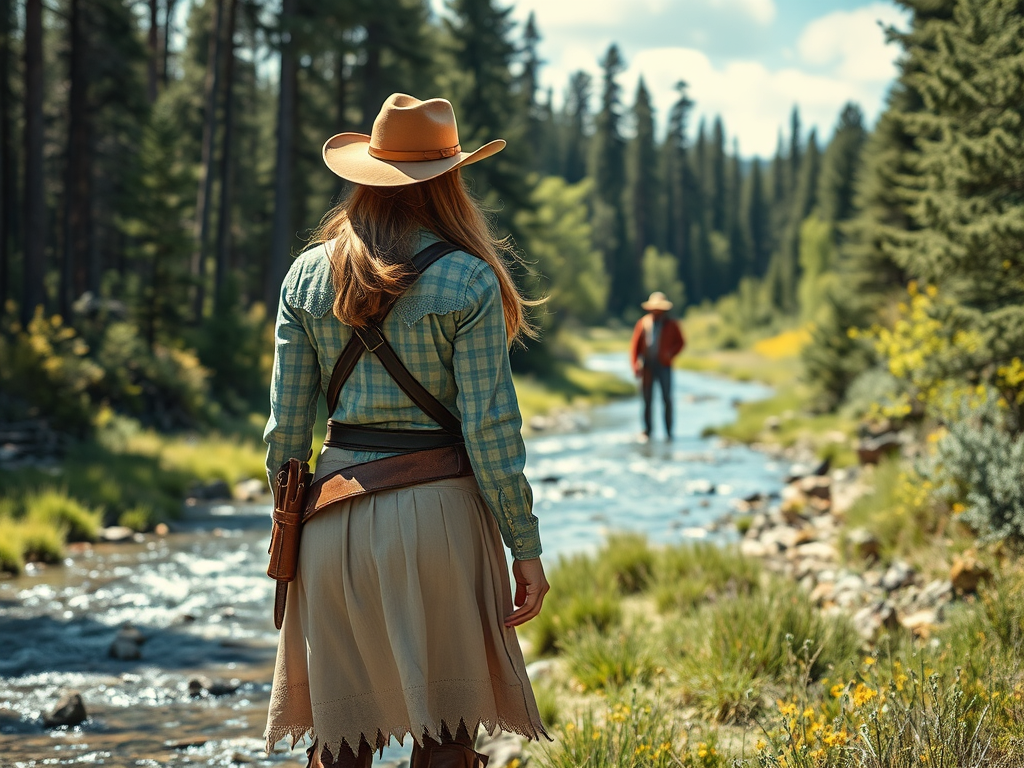




 The Word and The Song