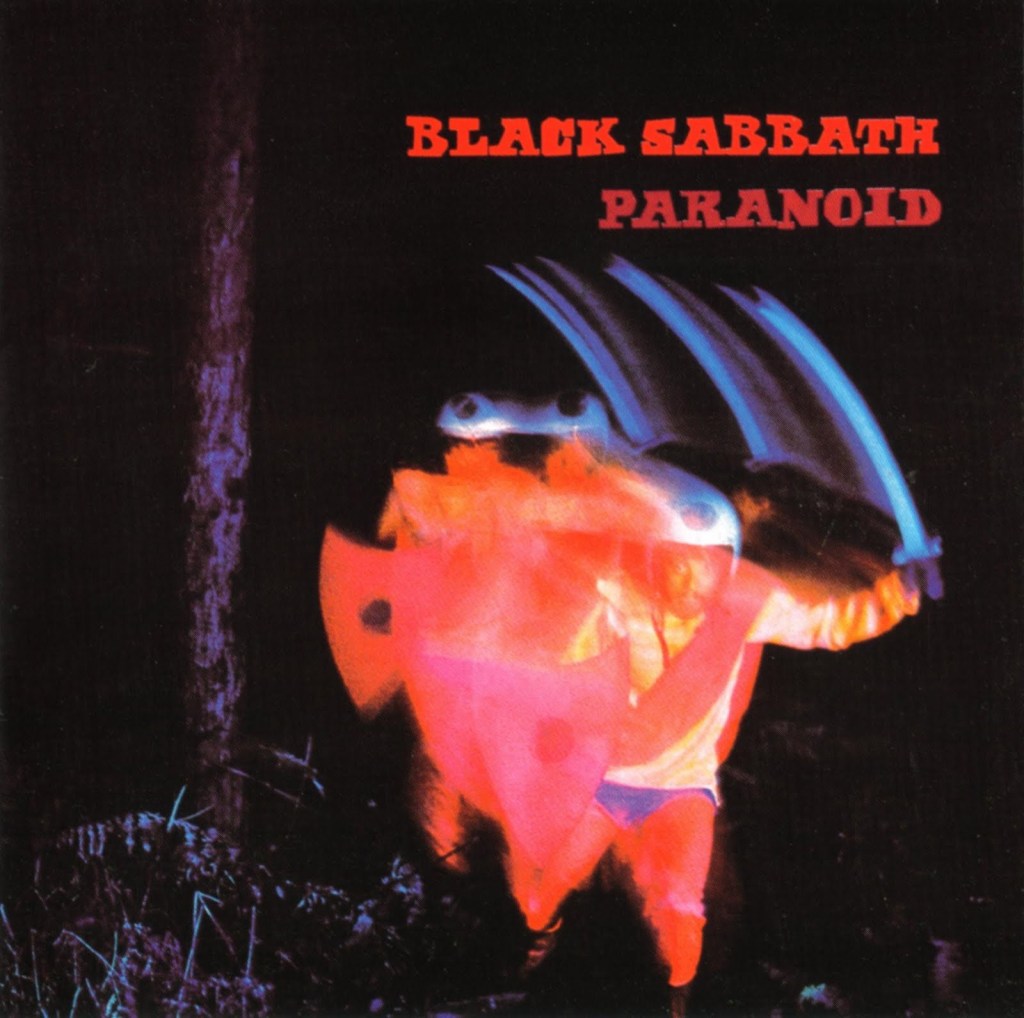
It’s hard to begin talking about this album without acknowledging the historical context. Simply put, metal as a genre owes its existence to Black Sabbath’s “Paranoid”. On top of having three of the most iconic metal songs on it (“War Pigs”, “Paranoid”, and “Iron Man”) this album is almost a blueprint from which so many subgenres would be born. Songs like “Iron Man” and “Electric Funeral” plod along as the pallbearers of Doom metal, while Sludge can very clearly be heard in the bass-laden riff of “Hand of Doom”. “Jack the Stripper” is a straight up Van Halen riff slowed down (or the other way around, given Van Halen wouldn’t release an album until eight years after). In short, almost every song seems to have threads that can be connected to bands that succeeded it, making it a piece of art that is worth listening to, if not for the music than for the sheer cultural importance of it. To listen to it is the equivalent of studying Da Vinci or Rembrandt!
So how does one evaluate an album that has been dropped in your laps as something not only heralded as one of the greatest of all time by the community that you subscribe to, but has also proved itself to be influential… dare I say a classic? Can one even be an impartial judge in that regard? It’s pretty damn hard. And while there’s a lot to love about it, this reviewer often finds himself comparing this album to another hard rock/ metal album that came out a year later from a band that is arguably tighter… Deep Purple. My complaints really start and end at the rhythm section… and truly start and end with drummer Bill Ward. While guitarist Tony Lommi cranks out mammoth riff after mammoth riff, and bassist Geezer Butler sits in the pocket and, dare I say, single handedly invents groove metal, Bill Ward proves time and time again that he isn’t close to the same league in terms of musicianship. “Rat Salad”, in particular, is a great example of this and becomes a hard listen when he’s given a minute of space to fill and aimlessly stumbles through it. In addition, while I can hear the influence the songs have on others to come, I can’t help but feel like after this week I won’t be returning much to them. It’s one thing to appreciate something, and another to actually have it make an impact on you.
That being said, even as I write these words it’s hard not to come to the defense of these young (now very old) men. It’s easy to argue that this is an album from a different time, one in which music was recorded “live” as opposed to with a click track or hundreds of digitally manipulated tracks. One could also argue that the historical context is more important than any other consideration, that before I even consider rating it it’s necessary to consider that without this album a whole helluva lot of my favorite albums wouldn’t exist. And they were kids for god sakes! What the hell was I doing in my twenties? All arguments are correct, and yet it is my task as I work through this series to try my best to remove any sort of lens that might skew my judgment, to go with my gut, and to provide an honest rating for an album that is beloved by many, and classic by all definitions. “Paranoid” is a culturally important album, one that will continue to influence and inspire artists long after this writer is dead, and will undoubtedly do more for its medium than any composition I’m able to whip up. And while I have small complaints I can’t deny it that.
My Rating: 4/5.
 The Word and The Song